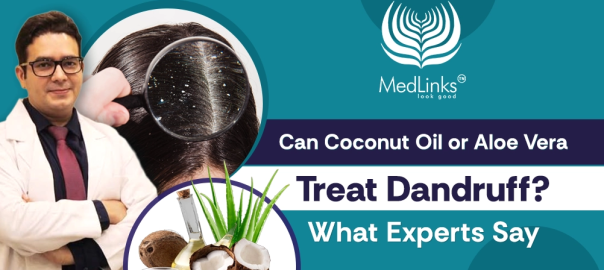
Dandruff is one of the most common scalp concerns, affecting people of all ages. Flaky scalp, itching, irritation, and even hair fall often push people to try home remedies before seeking professional care. Among these remedies, coconut oil and aloe vera are the most popular.
But an important question remains:
Can coconut oil or aloe vera actually treat dandruff—or do they just provide temporary relief?
Let’s break it down with medical clarity and a dermatologist’s perspective.
What Do Coconut Oil & Aloe Vera Actually Do?
Coconut Oil
Coconut oil is widely used for hair and scalp care because of its:
- Moisturizing properties
- Ability to reduce dryness
- Temporary soothing effect on itchy scalp
It helps soften dry flakes and improve scalp hydration. This is why many people feel immediate relief after applying coconut oil.
However, coconut oil does not have antifungal properties strong enough to treat dandruff caused by fungal overgrowth—which is the most common cause of persistent dandruff.
Aloe Vera
Aloe vera is known for its:
- Cooling and soothing effect
- Anti-inflammatory properties
- Ability to reduce redness and irritation
It can calm an irritated scalp and help with mild itching. Aloe vera gels may also improve scalp comfort in people experiencing sensitivity or dryness.
But like coconut oil, aloe vera does not eliminate the root cause of dandruff when it is medically driven.
When Do Coconut Oil & Aloe Vera Work?
Home remedies may help only in specific, mild situations, such as:
- Dry scalp due to weather changes
- Mild flaking without redness or thick scales
- Temporary scalp dryness caused by over-washing
- Sensitivity from harsh hair products
In such cases, coconut oil or aloe vera may:
- Reduce visible flakes temporarily
- Improve scalp comfort
- Make hair feel softer and healthier
For mild dandruff or dry scalp, these remedies can be supportive—but not curative.
When Do They Fail? (Fungal Dandruff & Seborrheic Dermatitis)
Most people don’t realize that chronic dandruff is usually fungal in nature, caused by an overgrowth of Malassezia yeast.
In these cases:
- Coconut oil can worsen dandruff by feeding the fungus
- Aloe vera may reduce itching but won’t stop flaking
- Dandruff returns quickly after stopping home remedies
- Hair fall may increase due to scalp inflammation
Conditions where home remedies fail:
- Fungal dandruff
- Seborrheic dermatitis
- Thick yellow or white flakes
- Red, itchy, inflamed scalp
- Dandruff spreading to eyebrows or beard
These conditions require medical anti-dandruff treatment, not oils.
Dermatologist’s View on Coconut Oil & Aloe Vera
According to experienced dermatologists like Dr. Pankaj Chaturvedi, dandruff management should always begin with a proper scalp evaluation rather than relying on assumptions or home remedies.
Dr. Chaturvedi explains that while natural remedies such as coconut oil and aloe vera can temporarily soothe dryness or irritation, they do not address the underlying medical causes of dandruff—especially conditions like fungal dandruff and seborrheic dermatitis.
“In clinical practice, dandruff is often fungal or inflammatory in nature. Oiling the scalp without proper diagnosis can sometimes worsen fungal activity, leading to increased flaking, itching, and scalp inflammation”
Medical experts emphasize:
- Dandruff is a scalp condition, not just dryness
- Incorrect treatment delays healing
- Long-term dandruff can contribute to hair fall and scalp damage
This is why professional evaluation is essential.
MedLinks Medical Solution for Dandruff
At MedLinks, dandruff is treated through a science-backed, dermatologist-led approach rather than trial-and-error remedies.
What Makes MedLinks Different?
- Detailed scalp examination
- Identification of fungal, dry, or inflammatory dandruff
- Customized Anti Dandruff Treatment
- Medical-grade solutions for long-term relief
- Integrated care with advanced hair and scalp treatment protocols
Under the expertise of Dr. Pankaj Chaturvedi, MedLinks focuses on:
- Treating the root cause
- Preventing recurrence
- Protecting hair health
If you’re dealing with persistent flakes, itching, or dandruff-related hair fall, professional care offers safer and more effective results than home remedies.
MedLinks is known for providing Best Dermatologist Treatment in Gurgaon, combining clinical expertise with patient-centric care.
FAQs: Coconut Oil, Aloe Vera & Dandruff
1. Can coconut oil permanently cure dandruff?
No. Coconut oil can moisturize the scalp but cannot cure fungal or chronic dandruff permanently.
2. Is aloe vera good for itchy scalp?
Yes, aloe vera can soothe itching and irritation, especially in mild or dry scalp conditions.
3. Can oiling increase dandruff?
Yes. In fungal dandruff, oiling the scalp can worsen flakes and itching.
4. How do I know if my dandruff is fungal?
If dandruff is persistent, itchy, recurrent, or associated with redness and hair fall, it is likely fungal and needs medical treatment.
5. When should I see a dermatologist for dandruff?
If dandruff lasts more than a few weeks, keeps returning, or causes hair fall, consult a dermatologist.
6. What is the best anti dandruff treatment?
The best Anti Dandruff Treatment depends on scalp diagnosis and is usually medical, not cosmetic.
7. Can dandruff cause hair fall?
Yes. Untreated dandruff can inflame hair follicles and contribute to hair fall.
8. Does MedLinks offer dandruff treatment?
Yes. MedLinks provides dermatologist-led dandruff and hair treatment solutions tailored to individual scalp needs.
Final Takeaway
Coconut oil and aloe vera can support scalp comfort, but they are not a cure for dandruff. Persistent dandruff needs professional evaluation and targeted treatment.
For long-term relief and healthy hair, trust MedLinks—where scalp health meets medical expertise.