GeneralMedLinks
Acne Scars vs Acne Marks: What’s the Difference and How Are They Treated?
27 October, 2026


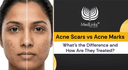


Acne marks mainly involve a change in skin colour after inflammation. Resurfx Treatment involves a change in the structure or texture of the skin because collagen and deeper tissue have been affected.
At MedLinks, the skin is first assessed to identify active acne, pigmentation, redness, true scarring, or a combination of these changes. This article explains the difference between acne marks and acne scars, the main types, and the treatment approaches used for each.
The main difference is whether the skin surface has changed. Acne marks are usually flat. They may appear brown, black, grey, red, pink, or lighter than the surrounding skin. The colour changes, but the surface of the skin remains relatively smooth.
Acne scars change the texture of the skin. They may appear as pits, depressions, uneven areas, or raised scar tissue. Marks and scars can also occur together. For example, a depressed acne scar may have surrounding pigmentation or redness. Flat post-acne colour changes are generally not considered true scars.
“Acne marks” is a common term used for colour changes that remain after acne inflammation settles. These changes may involve melanin, small blood vessels, or loss of pigment.
Brown, dark brown, black, or grey-brown marks are usually caused by post-inflammatory hyperpigmentation (PIH). Inflammation from acne can stimulate excess melanin production. This can leave dark spots after acne, even after the active lesion has healed.
PIH is more common and may last longer in darker skin tones. Sun exposure can also make the pigmentation appear darker or slow its fading.
Red or pink marks are often described as post-inflammatory erythema (PIE). These marks are mainly related to changes in small blood vessels after inflammation. They are different from PIH because excess melanin is not the main cause.
In some cases, inflammation may leave an area lighter than the surrounding skin. This is called post-inflammatory hypopigmentation. These colour changes are not true acne scars. Many gradually improve as the skin recovers.
Acne scars develop when inflammation damages the deeper layers of the skin and normal tissue does not fully reform during healing. Deep inflammatory acne, including nodules and cysts, has a greater risk of affecting collagen and leaving permanent textural changes. Understanding the different types of acne scarcan help you identify the nature of your scars and understand which treatment options may be suitable. Most facial acne scars are depressed, or atrophic.
Ice pick scars are narrow, deep depressions with sharp edges. They extend into the deeper skin and may look smaller at the surface than they actually are. Because of their depth, surface treatments alone may not be enough.
Boxcar scars are round or sometimes oval depressions. They often have defined edges and a flat base. Scar depth is an important factor to consider when you are selecting a treatment.
Rolling scars are broad, shallow depressions with sloping edges. Fibrous bands beneath the skin can pull the surface downward. This creates a wavy or uneven skin texture.
Hypertrophic scars and keloids develop when excess scar tissue forms during healing. They may occur on areas such as the jawline, chest, shoulders, and upper back. Their treatment is different from the treatment used for depressed acne scars.
Effective acne mark treatments usually begin with control of active acne. If new breakouts continue, new marks can continue to form. Daily sun protection is also important because ultraviolet exposure can darken post-inflammatory pigmentation.
Depending on the type of mark and the skin type, a dermatologist may recommend ingredients such as azelaic acid, retinoids, glycolic acid, or vitamin C.
Chemical peels and selected laser or light-based treatments may also be considered for some types of pigmentation. Treatment needs to be chosen carefully, especially in skin that develops pigmentation easily, because excessive irritation can worsen post-inflammatory pigmentation.
Treatment for acne scars is usually planned after active acne is reasonably controlled. The choice of procedure depends on the scar type, depth, skin tone, and whether several scar patterns are present together. If you want to get rid of acne scar, understanding the available treatment options and selecting an approach suited to your skin concerns is an important first step.
For rolling scars, subcision may be used to release the fibrous bands pulling the skin downward. It may be combined with microneedling, resurfacing procedures, or fillers when appropriate.
For boxcar scars, treatment may include fractional laser resurfacing, microneedling, radiofrequency microneedling, chemical techniques, or punch procedures. The choice depends partly on scar depth.
For narrow and deep ice pick scars, targeted procedures such as TCA CROSS or punch techniques may be considered because these scars extend deeper into the skin.
Microneedling and fractional lasers may support collagen remodelling across areas with multiple atrophic scars. Combination treatment is common because more than one scar type can occur on the same face.
MedLinks lists ResurFX as a non-ablative laser treatment used for acne scars and Morpheus8 as an RF microneedling treatment used for acne scarring. The clinic also uses approaches such as microneedling, laser-based procedures, and fillers for acne-scar concerns.
At MedLinks, acne-scar assessment begins by identifying whether the remaining changes are pigmentation, redness, depressed scars, raised scars, or a combination. This distinction helps guide the treatment plan.
At MedLinks, Dr Pankaj Chaturvedi is an AIIMS-trained dermatologist working in clinical and cosmetic dermatology, including acne and acne-scar treatment.
The treatment plan can then be selected according to the type of pigmentation, redness, scar depth, skin texture, and scar pattern present on examination.
Yes, acne marks can be prevented, but not all. Early control of inflammatory acne can reduce the risk of further scarring. Deep, painful, or persistent acne is more likely to leave lasting changes in the skin.
It is better to avoid picking, squeezing, or scratching acne lesions, as this can increase inflammation and tissue injury. Acne Buster Therapy may also be considered as part of an acne-care plan to help manage active breakouts and reduce the chances of new acne marks and scars. The suitability of this therapy depends on the individual's acne type, severity, and skin condition.
A dermatologist should be consulted if acne is deep, painful, persistent, or already beginning to leave marks or scars. A dermatologist can assess the skin and recommend an appropriate treatment approach based on the underlying cause and severity of acne.
1 Do acne marks turn into acne scars?
No. A flat acne mark does not gradually become a scar. Acne marks mainly involve changes in skin colour, while acne scars involve structural changes in the skin.
2 How long do dark spots after acne take to fade?
Some acne marks fade over several months. Darker or deeper pigmentation may remain visible for a year or longer. Skin tone, sun exposure, inflammation, and continued acne can affect how quickly they fade.
3 Can skincare products remove acne scars?
Skincare may help reduce pigmentation and improve mild surface irregularity. Established depressed or raised acne scars usually require a more specific procedural treatment plan.
4 Which treatment is best for acne scars?
There is no single treatment for every scar. Ice pick, boxcar, rolling, and raised scars have different structures. A dermatologist may use one procedure or combine several techniques according to the scar pattern and depth.
5 Should active acne or acne scars be treated first?
Active acne is usually controlled first. Otherwise, new breakouts may continue to produce fresh marks and scars while existing scars are being treated. Once inflammation is better controlled, scar-specific treatment can be planned.
* Required fields. Your email will not be published. All comments are moderated before being published.


Comments
Loading comments...