GeneralMedLinks
Burn scar vs burn mark on face: What is the difference?
21 September, 2026


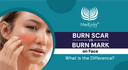


A burn on the face can heal, but the mark it leaves behind may stay for much longer. It may look darker, lighter, red, raised, or uneven. The first step is to understand whether it is a burn mark or a burn scar, because both need a different approach.
In this blog, you will learn the difference between the two, why they form, which treatments may be used, and when to see a dermatologist. At MedLinks, the doctor first checks whether the concern is pigmentation, scar tissue, or both before suggesting treatment.
A burn mark is usually flat and mainly affects the colour of the skin. The area may look darker or lighter than the skin around it, but the surface can still feel smooth.
On the other hand, A burn scar forms when a deeper burn damages the skin and heals with scar tissue. Because of this, the affected area may feel different as well as look different.
A skin burn scar may look or feel different from the surrounding skin and can appear in several ways. This depends on how deep the burn was and how the skin healed. It may be raised, thick, firm, tight, uneven, or slightly depressed. The colour can also be darker or lighter than the nearby skin.
If the area is flat and only the colour has changed, pigmentation may be the main concern. If the texture has changed too, scar tissue may have formed.
Melanin gives the skin its colour. After a burn, inflammation can disturb the way the skin produces melanin while it heals. Sometimes the injured area produces more pigment, which can leave a darker patch. This is known as post-inflammatory hyperpigmentation.
In other cases, the burn may damage some of the cells that produce pigment. The healed skin can then appear lighter than the surrounding area.
This is why burn marks on skin can look brown, dark brown, red, pink, grey-brown, or lighter than normal skin. The final colour can depend on the depth of the burn, the person's skin type, the way the area healed, and sun exposure.
A deeper burn damages more of the skin, so the body has to repair more tissue. During this process, collagen is produced to help close and strengthen the injured area. Sometimes this new tissue forms differently from normal skin. This leaves a scar behind.
One type is a hypertrophic scar, which is raised and thick but usually stays within the original burn area. A keloid is also raised, but it may grow beyond the original injury.
A contracture scar is different because it can pull the skin and make the area feel tight. If it develops near the mouth, eyes, neck, hands, or joints, it can also affect normal movement around that area. Knowing about the type of scar can help the doctor choose more compatible burn scars treatment.
A face burn mark can appear on the cheeks, forehead, nose, lips, jawline, or around the eyes. These areas do not all have the same skin thickness, and some move more than others. Because of this, the doctor needs to check the area before deciding on treatment.
The main concern may be dark pigmentation, light pigmentation, redness, raised scar tissue, depressed skin, or tight scar tissue. In some people, colour and texture changes are present together.
For this reason, burn marks on the face should be examined before choosing treatments such as lasers, peels, injections, or microneedling.
There is no single treatment used to remove burn marks from face because each type of mark needs a different approach.
If the area is flat but darker than the surrounding skin, extra pigmentation may be the main problem. A dermatologist may suggest topical medicines or selected skin procedures based on the depth of the pigmentation and the person's skin type.
Some healed burns stay red because small blood vessels remain visible in the area. These marks may need a different treatment from brown or dark pigmentation.
A burn may sometimes damage pigment-producing cells and leave a lighter patch. Since the problem is loss of pigment rather than excess pigment, treatments used for dark marks may not be suitable.
The right Burn scars treatment depends on the type of scar, how old it is, where it is located, and what change needs to be treated. Silicone gel or silicone sheets may be used for some raised scars and are usually applied regularly over time.
Laser treatment may also be used in selected cases. Different lasers work on different concerns, such as redness, pigmentation, scar thickness, or texture. The doctor chooses the laser and settings according to the scar and skin type.
MedLinks treats clinical and cosmetic skin concerns at its clinics in Delhi and Gurugram. For burn marks and scars, the doctor first examines the type of skin change before deciding what may be suitable.
Dr. Pankaj Chaturvedi, MBBS, MD Dermatology from AIIMS New Delhi, is a co-founder of MedLinks and works in clinical and cosmetic dermatology. His profile includes work related to pigmentation and scar concerns.
If you are searching for the best dermatologist in India for burn scars, it can help to check the doctor's qualifications, experience with scars and pigmentation, and how clearly the treatment plan and expected results are explained.
1 Is a burn mark the same as a burn scar?
No. A burn mark usually changes the colour of the skin, while a burn scar also changes the texture or shape. A scar may become raised, thick, tight, depressed, or uneven.
2 Can burn marks on face fade completely?
Some burn marks on face fade a lot with time, while others may remain visible. How much they fade depends on the depth of the burn, skin type, pigmentation, sun exposure, and healing.
3 Can laser treatment remove burn scars?
Laser treatment may improve redness, pigmentation, thickness, or uneven texture in some burn scars. The result depends on the type of scar and the skin, so complete removal cannot be expected in every case.
4 Why has my face burn mark become darker?
A burn causes inflammation, which can increase melanin production in the injured area. This can leave the healed skin darker than the skin around it.
5 When should I see a dermatologist for a burn mark?
You can see a dermatologist if the area stays dark or light, becomes raised or tight, causes pain or itching, develops an uneven texture, or affects normal movement.
* Required fields. Your email will not be published. All comments are moderated before being published.


Comments
Loading comments...